

The shift towards sustainable architecture is transforming the way homes and commercial spaces are designed. Materials are chosen more thoughtfully, lighting is planned for efficiency and building systems are assessed for long-term performance. Yet some of the most meaningful gains come from the elements people rarely see. Hardware influences durability, airflow and daily energy use far more than most realise.

Pivot hinges are one of these quiet contributors. In the sections ahead, we discuss circular design and construction, explore how pivot hinges support eco-friendly design and explain why they are becoming a valuable tool for architects committed to greener, more energy-efficient homes.

How small details influence sustainable architecture

Sustainable architecture is often defined by insulation values, solar performance and responsible material sourcing, but the finer details play an equally important role in long-term efficiency. Every component affects how a building moves, functions and responds to daily use, and these interactions have a direct impact on energy performance and material longevity.

Pivot hinges are a strong example of how subtle mechanisms can influence the bigger picture. Their load-bearing design reduces stress on frames, maintains alignment and helps prevent premature wear. Fewer repairs translate to fewer replacements and significantly less waste across a building’s lifecycle.

By prioritising hardware that lasts, designers strengthen the durability and environmental performance of the entire structure. In this sense, sustainability lives in small, subtle engineering choices that support broader circular design principles.

Sustainability through circular design

Circular design encourages green buildings to be created, used and maintained in ways that minimise waste across their entire lifecycle. It shifts focus from disposable components to systems that remain functional through repair, adjustment and reuse. This approach is increasingly important in a sector that accounts for roughly half of the world’s material use, with only a small share currently coming from recycled sources.

Within circular design and construction, pivot hinges offer the durability and adaptability necessary to minimise long-term material consumption. 

What makes pivot hinges naturally suitable for eco-friendly design 

Pivot hinges complement eco-friendly design because their mechanics support clean detailing, efficient construction and material-conscious specification. Their installation method eliminates the need for heavy reinforcing, which reduces the overall material load of the door assembly and supports more efficient use of resources during the build.

Key qualities that make pivot hinges compatible with sustainable architecture include:

  • A streamlined structural footprint that avoids bulky framing and reduces reliance on additional supporting materials
  • Compatibility with sustainable door substrates, including recycled timber, low-VOC composite panels and responsibly sourced solid woods
  • Support for flush, airtight door-to-wall integration, which improves thermal performance and reduces unintended air transfer
  • Even load distribution into the floor, which protects surrounding materials and maintains stability as the building settles

By allowing doors to perform well with minimal material intervention, pivot hinges support efficient construction and clean architectural detailing that aligns with sustainable design values.

The long-term efficiency benefits of pivot systems

Sustainable architecture depends on components that perform reliably for several years. Pivot systems deliver long-term efficiency by reducing maintenance, protecting adjacent materials and supporting the thermal stability of energy-efficient homes.

Key performance benefits include:

  • Durability that reduces replacement cycles Engineered to carry significant weight, pivot hinges resist sagging and warping, which reduces the need for repairs and replacements across the building’s lifespan.
  • Smooth operation that protects surrounding materials With minimal friction, pivot systems prevent wear on door edges, frames and adjacent finishes, helping sustainable materials maintain their integrity over time.
  • Performance suited to energy-efficient homes — Clean alignment and consistent movement help preserve tight seals, supporting stable indoor temperatures with less reliance on mechanical conditioning.

Design considerations when specifying pivot hinges for green building

In sustainable architecture, performance depends on more than choosing the right mechanism. How pivot hinges are specified, installed and paired with materials has a significant impact on long-term efficiency. 

Thoughtful planning helps ensure the hinge supports both the architectural intent and the environmental goals of the project. Consider the following design aspects when designing your build:

Door scale, load and longevity

The hinge must match the door’s weight, dimensions and material composition. Heavy recycled timber or composite doors may require heavy-duty hinges to maintain stability over many years. Choosing the correct load rating minimises future resource use.

Movement, frequency and environmental conditions

High-traffic zones require hinges rated for repeated cycles. Environmental exposure also matters. Spaces with humidity or temperature swings benefit from corrosion-resistant finishes and moisture-tolerant components.

Installation accuracy for long-lasting performance

Even small installation errors can affect a door’s alignment and reduce its thermal efficiency. Positioning the pivot accurately in the floor and ceiling supports smooth movement and consistent seals. Working with installers who understand architectural hardware ensures the hinge contributes to broader sustainability goals.

Mistakes to avoid when using pivot hinges in sustainable projects

Even well-designed green buildings can lose efficiency when pivot hinges are specified or installed incorrectly. Common mistakes to avoid include:

  • Choosing hinges with an incorrect load rating, which leads to premature wear and unnecessary replacements
  • Pairing pivot systems with door materials that are not suited to long-term movement or environmental exposure
  • Overlooking environmental conditions like humidity or temperature variation, which can affect performance over time
  • Allowing installation inaccuracies that compromise airtightness and reduce thermal stability in energy-efficient homes

Avoiding these issues ensures pivot hinges support the broader sustainability goals of the project rather than working against them. Sustainable construction relies on precise specification and installation, which is why engaging specialists early in the design process helps ensure every detail aligns with the project’s environmental intent.

Build sustainably without compromising value or performance with A’besco Architectural Hardware

A’besco Architectural Hardware offers a curated range of solutions that align with responsible building practices. Our pivot hinges support larger doors with minimal framing, while our concealed hinges deliver clean, uninterrupted lines suited to energy-efficient interiors. 

For doors that require smooth, reliable performance, our locks, latches and catches provide a refined and durable complement. If your project calls for seamless architectural integration, our invisible doors offer complete visual continuity without compromising structural integrity.

If you would like guidance on specifying hardware that supports sustainable architecture, our team is ready to collaborate with you. Explore the full range or speak with a specialist to refine the details that make your project perform beautifully for years to come.

The most memorable interiors often feel effortless — walls flow uninterrupted, doors vanish into planes of timber or plaster and light moves freely without visual clutter. Yet achieving this simplicity is anything but simple. Behind every clean line lies precise hardware and thoughtful coordination between designer, builder and installer. 

Among these refined mechanisms, concealed hinges play a quiet but transformative role. In this blog, we explore how concealed hinges enhance both aesthetics and performance, revealing why these subtle details are reshaping modern interior design trends.

The quiet power of invisible details in design

In contemporary interiors, restraint often speaks louder than ornamentation. Designers now seek to create spaces where form and function blend seamlessly, allowing materials, proportions and light to take centre stage. The smallest components, like hinges or catches, influence how a room feels, moves and connects.

Concealed hinges embody this philosophy of quiet sophistication. By removing visible hardware from sightlines, they let the architectural form read without interruption. The result is a refined aesthetic that feels calm and resolved. What was once purely functional becomes an integral part of the design story, supporting the growing preference for seamless design across residential and commercial spaces.

What makes concealed hinges different

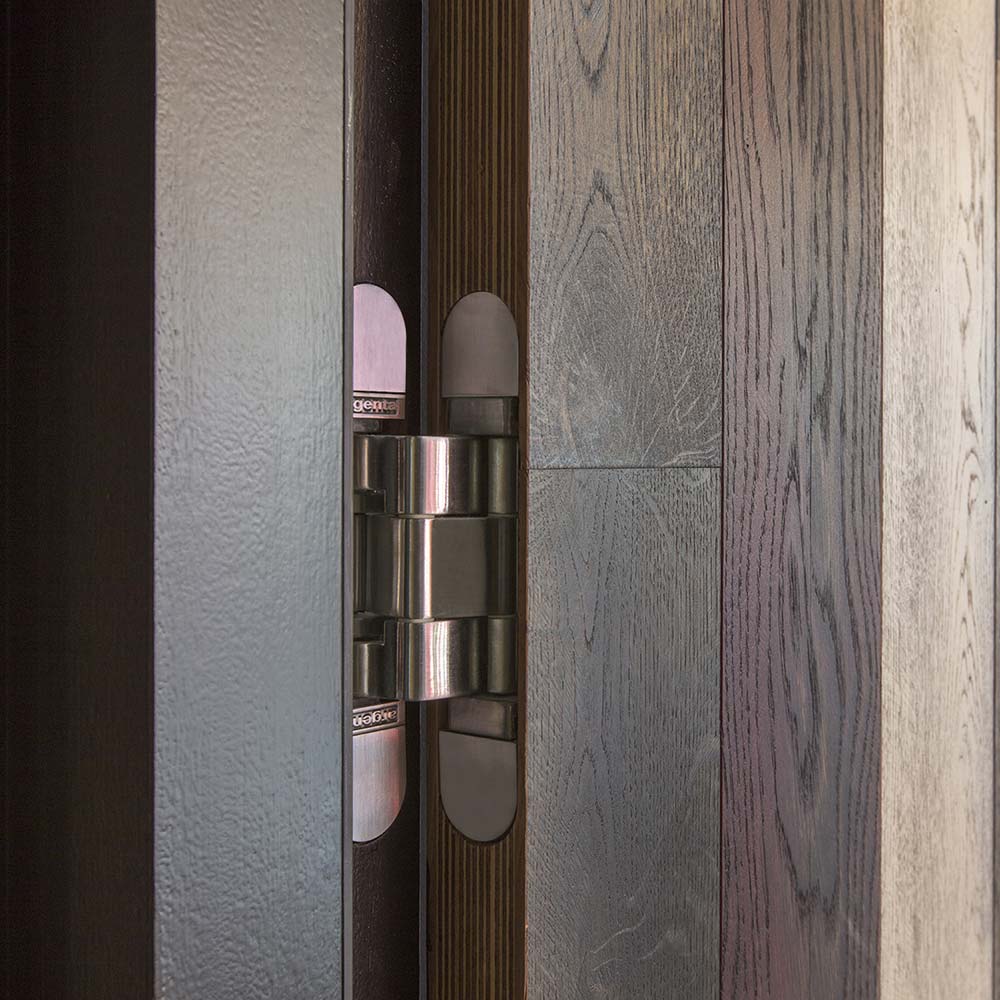
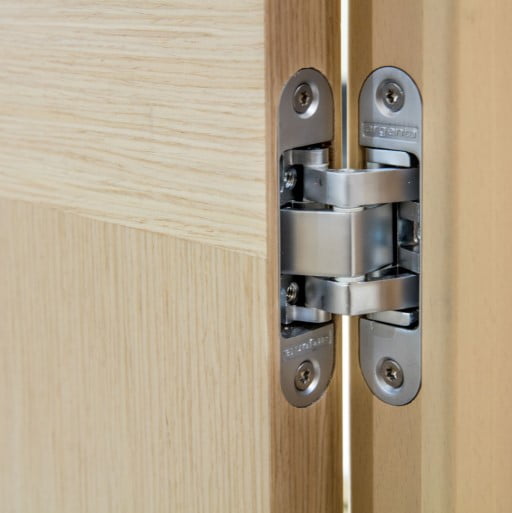
Traditional hinges are fixed visibly along the edge of a door, creating small but noticeable breaks in an otherwise smooth surface. Concealed hinges, sometimes referred to as concealed hardware, are installed within the door and frame, remaining invisible when the door is closed. This simple shift transforms both the appearance and performance of a space.

Because the hinge mechanism is recessed, doors can sit flush with surrounding walls or panels. This achieves a consistent, architectural finish that complements minimalist interiors and contemporary detailing. Concealed hinges also allow for precise 3D adjustment, enabling designers and installers to fine-tune alignment after finishing for an exact, seamless fit.

The role of concealed hinges in modern minimalist interiors

Concealed hinges align perfectly with the principles of minimalist interiors, where clarity of form, balance and restraint define the visual language. By eliminating surface distractions, these mechanisms allow designers to focus on proportion, texture and the relationship between elements. Every movement feels intentional, every line uninterrupted. 

These are the key benefits of concealed hinges:

Seamless transitions and spatial flow

In open-plan environments, continuity between rooms is key. Concealed hinges make it possible for doors to disappear into walls, creating an unbroken visual flow from one area to another. This continuity enhances spatial perception, allowing light and shadow to define boundaries instead of frames or hardware. The result is an interior that feels larger, calmer and more cohesive.

Elevating tactile and material harmony

Minimalist spaces rely on materials to express warmth and depth. Timber, stone and plaster each bring their own character, and visible hinges can disrupt that harmony. Concealed mechanisms preserve the integrity of these finishes, letting textures meet cleanly without interruption. The result is a surface that invites touch and reflection, embodying craftsmanship at its most refined.

Precision in design execution

A minimalist aesthetic demands precision. Even the slightest misalignment can draw the eye and break the illusion of simplicity. Concealed hinges enable precise adjustment across multiple axes, allowing installers to achieve perfect reveals and smooth operation. This level of accuracy reinforces the perception of quality throughout the project, from residential fitouts to high-end commercial spaces.

Why designers choose concealed hardware

Designers favour concealed hardware for its ability to simplify visual lines and preserve architectural intent. By removing visible fittings, this type of hardware allows walls and doors to read as uninterrupted surfaces. This restraint enhances proportion, light and material flow, creating the sense of calm that defines minimalist interiors.

Aesthetics are only part of the appeal. Concealed hinges deliver measurable functional benefits too. Their internal structure distributes weight evenly through the door leaf and frame, preventing sagging and maintaining alignment over time. Many models include 3D adjustment features, allowing fine-tuning after installation so every reveal sits perfectly. For joiners and architects alike, this means precision can be maintained long after the build is complete.

Designers also appreciate how concealed systems support versatility across materials and scales. From solid timber and painted MDF to metal or veneer panels, the right hinge can be tailored to the door’s size and function. When paired with complementary hardware such as pivots, locks and latches, these components work together to create a consistent architectural language that feels effortless but requires meticulous engineering.

Ultimately, concealed hinges and other fittings embody the designer’s pursuit of visual quietness. They reinforce the principle that true sophistication lies not in what’s added, but in what’s carefully concealed.

Design considerations for specifying concealed hinges

While concealed hinges are subtle once installed, their success depends on precise specification. Expert designers and builders always consider the following aspects:

Material and door weight

Each hinge model is engineered for specific door materials and load capacities. Solid timber and metal panels demand stronger concealed hardware, while lighter MDF or laminate doors may require smaller mechanisms. Selecting the right hinge ensures smooth movement and prevents sagging over time.

Movement and frequency of use

Doors in high-traffic areas benefit from hinges tested for repeated cycles. For occasional-use spaces, smaller or lighter-duty models may suffice. Factoring in the expected frequency of use helps balance durability with cost and performance.

Installation precision

Because concealed hinges sit within the door and frame, installation must be exact. Incorrect positioning can affect swing and alignment, undermining the minimalist effect. Coordinating with joiners or installers familiar with concealed systems ensures the final finish remains clean and consistent.

Enable your minimalist aesthetic with concealed hardware solutions from A’besco Architectural Hardware

Refined interiors rely on the details that disappear. Concealed hinges bring precision and balance to minimalist spaces, helping doors and wall panels sit flush for a truly seamless design.

At A’besco Architectural Hardware, our team collaborates with architects, builders and designers to specify the right concealed hardware for every application. From pivots that support large statement doors to locks, latches and catches that ensure smooth function, each component contributes to a cohesive architectural finish. For projects that demand visual continuity, our invisible door systems offer the cleanest integration possible.

Explore our curated range of architectural hardware or speak with our specialists for guidance on concealed hinges, pivot systems and other details that define refined modern design.

In modern architecture, it’s often the smallest details that make the biggest impact. Behind the clean lines and seamless transitions of today’s cutting-edge homes and commercial spaces lies a new generation of architectural hardware. Among these, the pivot hinge has emerged as a standout, redefining how designers and builders approach door systems. 

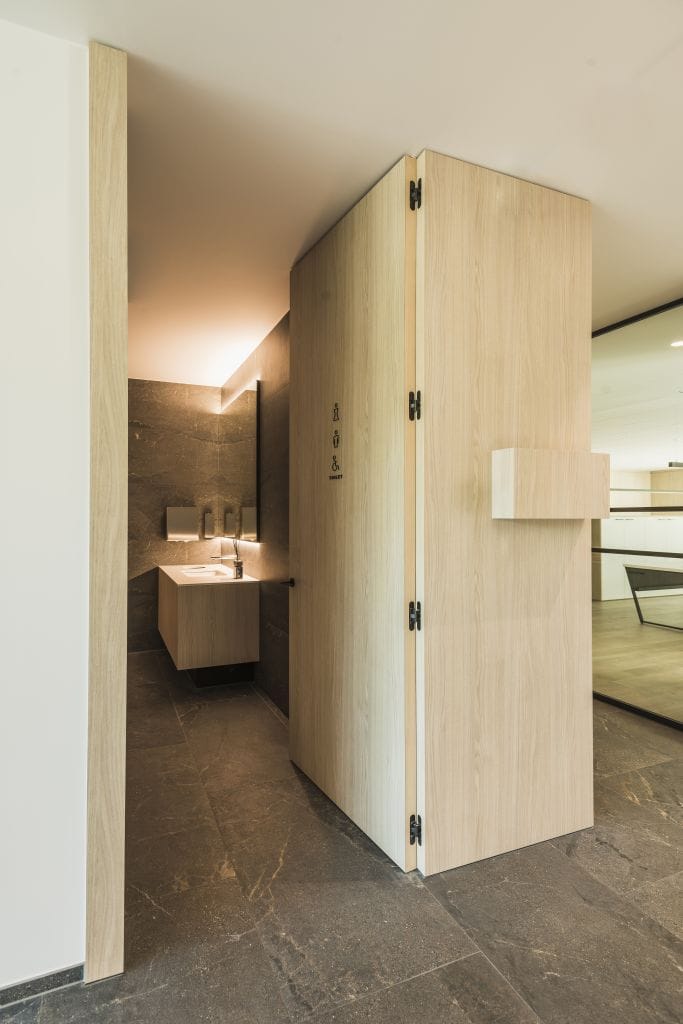
Unlike traditional hinge mechanisms, pivot hinges offer a minimal, almost invisible installation that allows for expansive, dramatic openings. They’re the driving force behind frameless doors, invisible door systems and large statement entryways that pivot effortlessly with a sleek, modern appeal. In this post, we’ll explore how this hardware is being used in increasingly creative ways and why it’s fast becoming a must-have in modern design.

What is a pivot hinge, and how does it work?

A pivot hinge is a rotating mechanism that allows a door to turn on a fixed axis, typically from the top and bottom of the panel, rather than swinging on side-mounted hinges. This simple shift in mechanics creates a clean, seamless look and unlocks new architectural possibilities for doors that are wider, taller or heavier than standard designs typically allow.

Because the weight of the door is transferred vertically through the pivot point, rather than relying on the door frame, this system allows panels to appear as though they float within a space without bulky frames or visible hardware.

Pivot hinges are especially effective in frameless door designs, where subtlety and simplicity are key. Often integrated into concealed hinges or hidden door systems, these hinges play a crucial role in achieving uninterrupted visual flow, which is an essential element in contemporary architecture.

Key benefits of pivot hinge systems

  • Supports larger, heavier doors — Ideal for oversized or statement-making panels without compromising stability.
  • Dual-directional opening — Enables smooth, bi-directional door swings for enhanced spatial flexibility.
  • Space efficiency — Perfect for tight areas, as pivot doors require less clearance than traditional side-hinged doors.
  • Minimalist design — Hardware can be fully hidden or subtly exposed, aligning with modern interior aesthetics.
  • Enhanced user experience — Available with features like soft-close and self-closing for seamless, quiet operation.

Together, these qualities make pivot hinges an increasingly popular choice in build projects where performance, precision and design must go hand in hand.

Innovative applications of pivot hinges in modern architecture

As architectural trends continue to favour visual simplicity and integrated functionality, pivot hinges have emerged as a versatile solution in both residential and commercial projects. Here are some of the most compelling use cases that highlight the versatility of this hardware in modern architecture:

Residential properties

  • Concealed pantry doors — Pivot hinges allow homeowners to hide pantry entrances within kitchen cabinetry or feature walls, maintaining a seamless aesthetic while offering easy access.
  • Oversized entry doors — Create a grand, modern entrance with an extra-wide pivoting front door that adds drama and architectural impact to the home’s facade.
  • Bedroom or ensuite transitions — Frameless pivot doors can be used between bedrooms, ensuites, walk-in robes and dressing areas for a more open-plan feel, offering both flow and privacy.
  • Invisible rooms or nooks —  Pivot systems can be incorporated into feature walls to conceal hidden rooms, home offices or reading nooks, blending them perfectly into the wall finish.

Commercial and public spaces

  • Retail fit-outs — Pivot hinges support wide storefront doors or internal partitions that allow for better foot traffic and visual merchandising without bulky frames.
  • Gallery and museum displays — In exhibition spaces, pivoting panels can serve as dynamic walls or doors that hide storage, entrances or even lighting systems without interrupting visual flow.
  • Boardrooms and private offices — Glass or timber pivot doors provide sound-separating functionality while preserving a clean, contemporary look in professional environments.
  • Restaurants and cafes — Pivot doors can separate dining areas from kitchens or storage rooms or even serve as bi-directional swinging entrances to high-traffic restrooms.
  • High-end hospitality — In hotels and spas, pivot hinges can be used to create hidden passageways, spa entrances or flush-finish transitions between public and private zones.

Custom and architectural features

  • Rotating wall panels — Designers can use pivot hinges to create rotating feature walls or built-in storage units that move fluidly, adding an interactive architectural element.
  • Room dividers in open-plan spaces — Large pivoting panels act as flexible  
  • dividers that can transform open spaces into smaller zones for flexible living or working environments.
  • Closet and storage systems — These hinges enable hidden storage areas or closets with doors that sit flush to the wall when closed, enhancing both aesthetics and functionality.

Installation considerations for pivot hinges

While pivot hinges create a refined, minimalist look once installed, they require careful planning during the design or renovation phase. Unlike traditional hinges, pivot systems are typically embedded into structural surfaces so proper installation is essential to ensure both performance and aesthetics for years to come.

Here are a few key factors to consider:

  • Structural support — Pivot hinges transfer weight vertically, so floors, ceilings or frames may need reinforcement, especially for oversized or heavy doors.
  • Precise alignment — Accurate placement is critical to ensure smooth operation and avoid stress on the hardware or door panel.
  • Swing clearance — Pivot doors often open in both directions so account for adequate space on both sides of the doorway.
  • Mounting conditions — Some models require recessed hardware or hidden channels, which must be planned during early construction.
  • Professional installation — For optimal results, it’s best to engage a builder or installer experienced with architectural hardware systems.

Explore pivot hinges with A’besco Architectural Hardware

Whether you’re designing a concealed pantry, a seamless entryway or an entire interior built around clean architectural lines, pivot hinges offer a design-forward solution that balances performance and elegance. At A’besco Architectural Hardware, we stock a curated range of premium pivot hinges, concealed hinges and invisible door systems that support sophisticated residential and commercial projects.

Need help finding the right architectural hardware for your build? Our team is here to guide you through your options, from locks and latches to fully integrated door systems. Get in touch today for a personalised consultation and quote. Or browse our online shop to explore the full range of hardware solutions.

Let’s bring your design vision to life, one detail at a time.

Architectural hardware quietly shapes how a home looks, feels and moves. Profiles, proportions and tactility set the tone, from soft curves to crisp architectural lines. In 2025, the focus has shifted to quiet details, refined mechanisms and responsible materials. Below, we map design innovations guiding specification this year in an informed yet approachable way.

Minimalism

Concealed, pared-back architectural hardware leads 2025. Slim pivot systems and concealed hinges keep sightlines clean and let the architecture read uninterrupted. These details benefit from early coordination between designer, builder and installer so floors, jambs and clearances are set correctly, delivering doors that move smoothly and quietly. Minimalism here is not absence for its own sake; it is restraint that elevates the surrounding materials.

Invisible doors

Frameless or invisible door systems are increasingly specified for galleries, living spaces and refined circulation zones. A flush invisible door frame allows the opening to sit level with the wall, avoiding architraves and shadow lines that would otherwise break the surface.

Modular frame profiles let installers position hinges and locks precisely, and many systems offer reversible handling so the swing direction can be set later in the fitout. Pair frames with 3D-adjustable concealed hinges to fine-tune reveals after paint.

The result is a well-hung door that feels satisfying to operate and maintains crisp, even lines over time.

Tactile and luxury finishes

As interiors become visually quieter, texture and materiality bring warmth. Hardware is a daily touchpoint, so how it feels matters as much as how it looks. This year, tactile luxury finishes continue to anchor premium schemes.

Unlacquered satin brass and aged bronze develop a living patina that tells a story of use, adding character to timber and stone palettes. In coastal or high-wear environments, PVD finishes in graphite and brushed nickel offer exceptional resistance to corrosion and abrasion, keeping hardware pristine for years.

The best finish selections balance longevity with sensorial appeal, reinforcing the room’s material narrative rather than competing with it.

Modern locks, latches and catches

The hardware trends in core mechanisms are evolving from purely functional parts into details that enhance the experience of a space. Magnetic latches reduce rattle, soft-close catches temper impact and premium mortise locks deliver firmer, more secure engagement with a refined feel at the lever. These choices help the door operate cleanly without visible hardware buildup.

For homeowners, the gains show up every day as quieter operation, fewer misalignments and hardware that is easier to live with. Thoughtful specification here can lift the perceived quality of an entire fitout.

Smart home integration for doors and entrances

Smart access integration is now widely adopted in residential hardware. The emphasis is on unobtrusive solutions that add real convenience: keyless entry sets with app control, temporary codes for guests or trades and integrated strikes and readers coordinated with the chosen lock.

These smart home integrations keep spaces visually calm while delivering secure, seamless entry. If you are layering in a video doorbell or intercom, plan the technology around the architectural language of the entry so the hardware remains the hero.

For smooth implementation, plan power and network early, confirm compatibility with existing alarms/intercoms and specify battery backup for outages. Choose platforms that support temporary codes, audit trails and privacy controls.

For retrofits, prefer low-profile, wireless sets and document handover steps so owners and facility managers can manage updates without disruption.

Health, wellness and accessibility features

Post-pandemic awareness keeps hygiene and comfort on the brief, particularly in multi-residential and commercial settings. Antimicrobial coatings on levers and plates can help inhibit surface microbes in high-touch zones, adding a quiet layer of reassurance.

Accessibility is now table stakes rather than an add-on. Universal design principles, aligned with Australian accessibility guidance (for example, AS 1428.1), prefer ergonomic lever handles over round knobs because they are easier for people of all ages and abilities to operate.

Consider handle geometry, return-to-door requirements and the force needed to actuate the latch. The goal is effortless movement that respects a wide range of users.

Sustainability and ethical materials

Specifiers are prioritising hardware that performs and preserves resources. Look for meaningful recycled content in brass, bronze and stainless steel, along with Environmental Product Declarations or other lifecycle information when available.

Sustainability also includes durability. Finishes that last, mechanisms that can be maintained and products designed for disassembly all contribute to lower whole-of-life impact. A responsible hardware schedule is one that looks good today and continues to function beautifully for years.

Where to explore these design innovations

When you are ready to reinvent your space with these trends in mind, A’besco Architectural Hardware can help with curated, design-led options across the key categories discussed in this guide. Explore pivot systems for clean sightlines and confident movement, specify concealed hinges that allow precise 3D adjustment and refined detailing, consider invisible door frames when you want walls to read as uninterrupted planes and select locks, latches and catches that elevate feel while supporting a minimalist aesthetic.

The A’besco Architectural Hardware team provides practical guidance on door weights, clearances and installation and can coordinate finishes so all hardware reads as one coherent palette. If you prefer to browse ranges first, you can explore our full collection.

Your vision, our expertise

The defining hardware trends of 2025 point to spaces that are intuitive, beautiful and secure. Minimal details, invisible frames, tactile finishes and smart home integration work best when they are considered as part of the architectural language from day one.

Whether you are refining a single doorway or scheduling a full home, the right selection will feel effortless under hand and look quietly confident in place. A’besco Architectural Hardware helps make specification straightforward.

We listen, advise and collaborate with your builder and installer to achieve a refined result that aligns with your design intent. Ready to move from ideas to a resolved schedule? Contact us today to explore a curated collection of architectural hardware for 2025 and beyond.

Ever had a door that won’t stay shut? Sometimes it’s the smallest fixtures that make the biggest impact on daily comfort and convenience. A quality door catch plays a quiet but essential role in how your home or workspace functions. From keeping doors in place to contributing to a sleek design, the right catch can elevate both usability and style.

In this guide, we’ll explore different door catch types, their applications and how to choose a door catch that matches your needs.

Why door catches matter in everyday spaces

A door catch is a device that holds a door in a closed position without needing a traditional lock. Unlike a latch, which often involves a turning mechanism, a door catch typically uses a simpler holding force to keep the door in place.

Door catches are used in a wide variety of spaces. You’ll find them in wardrobes, kitchen cabinets, internal passage doors and even large-scale commercial fit-outs. They provide practical control, help reduce wear on hinges and can contribute to a cleaner visual finish by removing the need for external hardware. With the right maintenance, door catches can remain reliable and visually unobtrusive. 

Factors to consider when choosing a door catch

The benefits of a door catch might seem small, but you’ll definitely notice when one’s not doing its job — like a door that won’t stay shut or one that slams unexpectedly. That’s why it’s worth picking the right one. So, when looking for the best door catch for your home, consider these factors:

Door type and weight

Check the size, weight and material of the door. Solid timber or heavy internal doors may need stronger or specific heavy door catch models for secure closure. Lightweight cabinetry or flush panels can typically use magnetic or spring-loaded catches. For doors that shift slightly over time, adjustable catches can offer more flexibility.

Frequency of use 

High-traffic areas like hallways, shared bathrooms or office doors benefit from door catches designed for regular use. Look for materials like stainless steel or reinforced plastic and mechanisms that won’t wear quickly. For occasional-use spaces, simpler models may suffice.

Security level 

While door catches aren’t designed for full security, some offer stronger hold force or lock-compatible integration. This can be useful for utility closets, storage cupboards or areas where a closed door should resist casual access.

Installation 

Check whether the catch is surface-mounted or recessed. Surface-mounted catches are easier for DIY installs, while concealed models often need accurate fitting by a joiner or tradie. Understanding the right type of installation for your door catch can help you plan your time, tools and finish more effectively. Consider installation constraints, especially in retrofits or existing cabinetry.

Aesthetic match 

Many catches come in a range of finishes and profiles. Some catches offer clean lines and minimal visibility, making them ideal for contemporary interiors where the hardware should disappear into the design, while others feature more decorative details or traditional shapes that can complement classic or heritage-style spaces. Choosing the right style ensures the catch blends in — or stands out — just the way you want.

Budget 

There are door catches to suit most budgets. Entry-level options are functional for basic applications, while premium catches like concealed magnetic models provide durability and aesthetic value in high-end builds. Factor in longevity and installation costs as part of the decision.

Magnetic door catches — best for most use casesa

Magnetic door catches use a magnet and a metal plate (or another magnet) to hold the door closed. These are perfect for modern interiors that favour minimal hardware and smooth finishes.

They’re commonly used in wardrobes, cabinets and internal doors where silent, contactless closure is a priority. Magnetic door catches provide a clean look without visible fixtures and are well-suited to handleless or push-to-open cabinetry. They are also ideal as a door catch for cabinets where soft-close performance and minimalism are desired.

If you’re after one of the door catches for home use, magnetic options offer one of the best combinations of style and function.

Match your door to the right catch with A’besco Architectural Hardware

From wardrobes to wall panels, the right door catch makes a space feel more refined and practical. A’besco’s range offers easy installation, lasting reliability and a clean finish for most doors. Whether you’re updating a single door or outfitting an entire space, we have options to suit a variety of functions and aesthetics.

Explore our full range of architectural hardware today to explore solutions that suit your doors and design style. Need guidance? We’re happy to help. Get in touch with us for expert advice on the best hardware for residential, commercial or cabinetry use. We can also help with proper door catch installation, care tips and maintenance support — everything you need to keep things running smoothly.

A door that doesn’t swing smoothly can be more than just an irritation. It might drag, creak or strain against its frame. Over time, it can cause damage to the door, the hardware or even the surrounding structure. The cause often comes down to the pivot system behind it.

For builders, architects and renovators, choosing the right pivot hinge isn’t just about form. It’s a functional choice that affects door stability, movement and lifespan. Getting it wrong can lead to premature wear, costly fixes and unhappy clients, especially when working with pivot doors designed for impact and durability.

What is a door pivot, and how does it work?

A door pivot is a hinge system that lets a door rotate from fixed points at the top and bottom, instead of being attached along the side like a standard hinge. This shifts the door’s weight to the floor and head support, making it ideal for larger or heavier pivot doors.

Most pivot hinge systems include a floor-mounted base, a top guide and a spindle that allows rotation.

Beyond function, door pivots also offer a cleaner look by removing visible side hinges. They’re often used in modern designs like concealed doors, full-height panels and centre-pivot entries.

Key factors to consider when choosing a pivot

Not all door pivots are created equal. The right choice can make a door feel weightless and responsive, while the wrong one can lead to early wear, damage or visual misalignment. To avoid surprises after installation, take these factors into consideration.

  1. Door size and weight

This is one of the most important starting points. The weight and height of the door directly impact the type of pivot hinge required. Using a pivot that isn’t rated for the door’s weight can lead to sagging, binding or failure over time.

Many architectural pivot hinges include weight limits or load ratings. Check these carefully during selection.

For example, a lightweight aluminium door might only need a basic hinge, but a 100kg custom timber door will need something far more robust.

Also, consider the width. Wider pivot doors exert more torque on the pivot point and may need an offset or centre pivot to manage balance and swing effectively.

  1. Frequency of use

Door pivots in busy environments, such as retail entries, hotel lobbies or staff corridors, can be opened dozens or even hundreds of times a day. Each swing applies force to the pivot mechanism. Over time, this adds up.

If you’re installing a pivot hinge in a high-use area, look for commercial-grade hardware tested for durability and wear. These often come with cycle ratings and reinforced bearings. Residential doors used only a few times a day won’t need the same level of durability, but quality still matters.

  1. Type of movement

Pivot hinges can be designed for single-direction or double-action movement. 

Double-action pivot doors swing in both directions and return to centre using a built-in spring mechanism or floor closer. They’re common in commercial kitchens, galleries and open-plan spaces.

Single-direction pivots only swing one way. They’re often used in residential applications where control over the swing direction is needed or where wall placement limits door travel.

This isn’t just about door mechanics. The movement style directly affects how the surrounding space is used and navigated. In settings where children, elderly people or quick foot traffic are present, limiting door swing might reduce accidents or collisions.

  1. Door material

The type of door material can affect both the weight and the method of installation. Solid timber and laminated glass are heavier than MDF or hollow-core products. Some materials, like steel or aluminium, may require specialised fixings or brackets to attach the pivot hinge securely.

Additionally, some pivots may be visible or partially recessed. If you’re using a feature door with natural timber grain or textured surfaces, a concealed door pivot may be more appropriate to avoid disrupting the finish.

Tip: For doors made from porous or soft materials, use reinforcing plates or mounting hardware as recommended by the manufacturer.

  1.  Installation location

Where the door is located makes a big difference to the hardware it needs. Outdoor pivot doors must handle exposure to moisture, dirt, temperature changes and UV. This usually means selecting corrosion-resistant finishes such as stainless steel, brass or specially treated aluminium.

Indoor installations allow for more visual flexibility but might still need to account for humidity or heating, especially in bathrooms or laundries. Doors near pools or kitchens may also face increased moisture.

  1. Desired visual effect

In design-driven projects, how the door pivot looks or doesn’t can be as important as how it functions. Concealed systems allow the door to appear flush with the wall, which is a popular effect in minimalist homes or commercial lobbies.

Exposed pivot hinges, on the other hand, can add a subtle industrial feature. They are usually available in finishes like satin chrome, matte black and bronze, which can enhance the overall look rather than fade into the background.

  1. Compliance and safety

In some builds, especially commercial or public ones, you’ll also need to consider building codes and safety compliance. Some pivot hinges include hold-open features, soft-close damping or delayed-action closing to improve accessibility and reduce risk.

Fire-rated pivot doors or emergency exits may require hardware that meets specific performance standards. If you’re unsure, check local requirements or consult a hardware specialist.

Explore quality pivot solutions from A’besco

Door pivots might be hidden behind the scenes, but they carry more weight, literally and figuratively, than most people realise. From balancing large entry doors to delivering long-term durability in busy environments, the right pivot makes all the difference.

Choosing the right pivot hinge helps extend the life of your pivot doors, keeps daily operation hassle-free and supports the overall finish of your build. At A’besco, we offer a wide selection of door pivots designed to meet both residential and commercial needs. Explore our pivot collection or browse the broader architectural hardware range to find the right fit for your next project.

If you’d like advice on choosing the right hardware, our team is here to help. Connect with us today.

Visible hinges can disrupt the clean look of modern interiors. They catch the eye, clash with sleek finishes and can make even high-end designs feel cluttered. For homeowners, designers or builders chasing a seamless aesthetic, exposed hardware can be a frustrating compromise.

That’s where concealed hinges come in. These hidden fittings offer a practical solution for anyone looking to combine visual simplicity with reliable door function. By staying out of sight when doors are closed, they deliver a polished finish that suits contemporary spaces. From kitchens to commercial builds, concealed hinges have become the go-to choice for a modern, minimal finish.

What are concealed hinges?

Concealed hinges work differently from surface-mounted or butt hinges. Rather than being fastened to the surface of a door and frame, they’re hidden inside, so the hardware can’t be seen when the door is closed. This helps to achieve a sleek look.

Visually, they create a minimalist appearance that complements today’s design preferences. Functionally, they offer more control over door movement and alignment.

Most concealed types of hinges come with multi-directional adjustability, making them easier to fine-tune during installation or maintenance.

What are the common types of concealed hinges?

Here are some of the popular types of concealed hinges used across different cabinet and door styles:

  • Full overlay concealed hinge — This hinge is used when the cabinet door sits over the front edge of the cabinet box or frame. When closed, the door aligns closely with the cabinet panels for a sleek, modern appearance. Some designs allow for a small reveal, depending on how the hinge and mounting plate are set up.
  • Half overlay concealed hinge Ideal for cabinets where two doors meet in the centre. These hinges allow each door to cover part of the frame without clashing. A cranked hinge arm and raised mounting plate help reduce the overlay, making space for both doors to operate smoothly.
  • Inset concealed hinge — In this setup, the door sits inside the cabinet frame so the outer surface lines up flush with the cabinet edges. A cranked hinge arm and raised mounting plate are used to achieve this completely recessed finish.
  • Pivot concealed hinge — Best for cabinets with inset doors where you want minimal visible hardware. These hinges allow the door to pivot open smoothly and are commonly used in lightweight or industrial cabinet applications where space and discretion are key.

What are the benefits of using concealed door hinges?

Choosing concealed types of hinges isn’t just about appearance. There are practical reasons why they’re widely used in homes and businesses:

  • Hidden finish — Concealed hinges stay out of sight when the door is closed, creating a tidy, uninterrupted surface.
  • Smooth function — They’re engineered for fluid, controlled movement that reduces door stress over time.
  • Easy adjustment — Built-in screws let you make fine adjustments without taking the door off the frame.
  • More secure — With no visible hinge pins, it’s harder for intruders to tamper with or remove the door.

Where do concealed hinges work best?

Concealed hinges are incredibly versatile and suit a wide range of uses. In homes, they’re common on internal doors, built-in wardrobes and high-end cabinetry. In kitchens, they offer a sleek look on cupboard and pantry doors while providing quiet, soft-close features that homeowners appreciate.

Commercial spaces use them for cleaner aesthetics and tamper-resistant fittings. You’ll often see them in retail, hospitality and office interiors.

For designer builds, concealed types of hinges are the preferred choice for flush doors that blend into the wall, offering a hidden entrance or minimalist finish.

How to install concealed hinges the right way?Where do concealed hinges work best?

Tools you’ll need

Common tools include a drill, screws, screwdrivers and, in some cases, a router for creating hinge recesses. Some concealed hinges also come with installation templates or guides, which can help ensure accurate placement and make the process easier.

Step-by-step guide
  1. Mark the hinge positions on the door using a pencil and measuring tape.
  2. Use a drill or router to create recesses for the hinge cups, following any provided template, if available.
  3. Insert the hinge cups into the recesses and secure them with screws.
  4. Attach the mounting plates to the cabinet or door frame.
  5. Clip the hinges onto the mounting plates.
  6. Adjust the door alignment using the hinge’s built-in adjustment screws.

DIY or professional help?

If you have the right tools and a steady hand, installing concealed hinges can be a DIY project. However, for heavier doors or precise fitting, a professional installer can save time and ensure better results.

How to choose the right hinge for your door?

Not all concealed hinges are created equal. The best one for your project depends on several factors. Start by identifying your door type and size. Is it a lightweight cabinet door or a full-sized internal door? Heavier doors will need heavy-duty hinges rated for higher loads.

Next, consider the overlay. Do you want the door to sit fully over the frame or recessed inside it? The hinge type will affect how the door lines up with the cabinet or wall surface.

Material is another key factor. Stainless steel is ideal for high-moisture environments like kitchens and bathrooms. Brass or alloy hinges might suit low-traffic or decorative spaces. Always look at product specifications to make sure the hinge will work with your materials and design layout.

How do you maintain and adjust concealed hinges?

Concealed hinges are designed for longevity, with many rated for more than 200,000 open and close cycles. Built from robust materials, they require very little upkeep, but occasional maintenance helps ensure long-term performance.

A simple cleaning every so often will remove dust and debris, while a light application of lubricant can keep the movement smooth. It’s also smart to check alignment now and then. If a door begins to sag or doesn’t close evenly, use the hinge’s built-in adjustment screws to tweak its position. Most concealed hinges offer 3D adjustability, so you can fine-tune the height, depth and side-to-side alignment without taking anything apart.

Find the perfect concealed hinges at A’besco

The right concealed types of hinges improve the appearance and performance of your doors. They create a clean finish while supporting smooth, long-term function.


At A’besco, we offer a wide range of concealed door hinges and other architectural hardware suitable for residential, commercial and architectural applications. Whether you are starting a new build or replacing existing fittings, you can find dependable options that match your project requirements. Browse the full range or speak with our team for expert product advice.

When envisioning your dream home, it’s easy to get swept away by architectural details, flooring choices, and paint swatches. However, a crucial element often overlooked in the early stages—window furnishings—deserves a prominent place in your initial design discussions. Integrating blinds and curtains from the very beginning of your home’s design journey can significantly impact not only its aesthetic appeal but also its functionality, energy efficiency, and overall comfort.

Beyond Decoration: The Multifaceted Role of Window Furnishings

Window treatments are far more than mere decorative accents. They are instrumental in:

Aesthetic Enhancement: Window furnishings contribute significantly to the mood and style of a room. They can introduce dramatic flair, soften harsh lines, add texture, or infuse a pop of colour, tying together your interior design scheme.

Light Control: Expertly chosen furnishings allow you to modulate natural light, preventing glare, protecting interiors from UV damage, and creating the perfect ambience for any time of day.

Privacy: From bustling urban settings to serene suburban havens, window coverings offer essential privacy, transforming your home into a personal sanctuary.

Energy Efficiency: High-quality blinds and curtains act as insulators, helping to retain warmth in winter and block out heat in summer. This can lead to substantial savings on energy bills and a more consistent indoor climate.

The Strategic Advantage of Early Planning

Involving a window furnishings specialist early in your design process is a smart financial and practical decision. By consulting an expert during the planning or architectural phase, you can:

Allocate Budget Effectively: As a general guideline, consider dedicating 2-5% of your total build cost to quality blinds and curtains. This foresight ensures you invest in solutions that meet your needs and enhance your home’s value.

Avoid Costly Afterthoughts: Retro-fitting window treatments can be more expensive and limit your options. Early planning ensures seamless integration and avoids unforeseen expenses.

Optimise Design Possibilities: An expert can advise on structural considerations, such as accommodating pelmet cavities for a sleek, integrated look or planning for motorised systems.

Designing for Light, Space, and Innovation

Thoughtful planning extends to considering how window furnishings interact with your living spaces:

Motorisation: The convenience and sophistication of motorised blinds are increasingly popular. Planning for power points and wiring during the build phase makes integration effortless.

Space Management: Account for the physical space curtains will occupy when drawn back. This prevents them from obstructing walkways or impacting furniture placement.

Integrated Solutions: Explore high-end design features like built-in pelmet cavities, which conceal curtain tracks and blind mechanisms, offering a clean, minimalist finish.

Embracing Sustainability with Smart Furnishings

As environmental consciousness grows, sustainable window furnishing options are gaining traction. Innovations like the Duette blind from Luxaflex exemplify this trend, offering exceptional thermal properties that significantly enhance your home’s insulation, reducing reliance on heating and cooling systems.

In conclusion, your window furnishings are not an afterthought but a fundamental component of your home’s overall design. By prioritising them from the outset and collaborating with experienced professionals, you can create a space that is not only visually stunning but also perfectly tailored to your lifestyle, comfortable, and energy-efficient.

Nestled in the breathtaking hills of Binna Burra, Loehill House is the perfect blend of heritage charm and modern living. Home to Australian cricketer Adam Zampa, his wife Harriet, and their young son, this stunning family retreat combines thoughtful design with a deep respect for the surrounding natural beauty—and Luxaflex® is proud to be part of the story.

Loehill House started with a century-old cottage that now serves as the sleeping wing of the home. From there, a 20-metre hallway connects the original structure to a modern extension featuring open-plan living, dining, and kitchen areas. The result is a seamless flow of old and new, brought together with natural materials and a neutral palette that reflects the rolling green landscape outside.

When it came to choosing window coverings, Adam and Harriet were looking for solutions that offered light control, privacy, and energy efficiency—all without compromising the calming, natural vibe they’ve created throughout the home. That’s where we came in!

Bringing Light and Comfort Inside

For the bedrooms and living areas, we installed Luxaflex® Duette® Shades paired with sheer curtains. This combination not only looks stunning but also delivers practical benefits. The Duette® Shades provide excellent insulation, keeping the home warm in winter and cool in summer, while the sheer curtains add a soft, airy feel and layers of texture.

Adam said it best: “The Duette® Shades provide excellent light control, insulation, and privacy, with an understated elegance that complements the simplicity of the home. They’ve really elevated the design.”

In the bathrooms, Luxaflex PolySatin® Plantation Shutters were the perfect choice. Not only do they look beautiful, but their water-resistant properties make them ideal for both the original bathroom and the new additions, creating a cohesive style across old and new spaces.

The Dream Home Vision

Loehill House is a true reflection of Adam and Harriet’s vision—a home that respects its heritage while embracing modern, family-friendly design. We’re thrilled to have played a part in helping them create a space that not only looks incredible but is also comfortable and functional year-round.

If you’re looking to achieve the same balance of style, comfort, and practicality in your home, Luxaflex® has a range of innovative solutions to suit every need.

Smart technology that works for you and your lifestyle

The world’s most beautiful window coverings are now also the most intelligent.

The new Luxaflex® PowerView® Automation takes the sophistication of your window coverings to new heights—with a variety of control options, a user-friendly new app, and even an environmentally-friendly rechargeable battery wand.

Smart new features allow you to align your window coverings with the rising and setting of the sun for optimal energy efficiency, and you can even control your coverings in various precise modes and directions—up, down, tilt and traverse.

Discover the difference automation can make in your home.

YOUR WINDOWS. YOUR WAY.

With PowerView® Automation, you can control the Luxaflex® window coverings throughout your home in a way that works for you and your lifestyle. There are four handy control options:

PowerView® App
This user-friendly app provides you with all the tools you need to you set up, manage, and digitally operate your window coverings. You can use your smartphone or tablet like a remote control for individual shades, or for several coverings across your home.

Pebble and Surface Remote
When at home, you also have the option of controlling and adjusting your window coverings via these stylish and easy to use remotes – both handheld and wall-mounted.

PowerView® Gateway
This feature ‘turbocharges’ the capacity of your PowerView® app – allowing you to add voice control; integrate with other home automation features like lights and music; and leverage the RemoteConnect functionality, which allows you to control your shades from anywhere in the world.

Smart Home Systems
Using the PowerView® Gateway, you’re also able to integrate with a variety of third-party smart home systems for voice control, including Amazon® Alexa®;, Hey Google, Apple HomeKit®, Control4™ and more.

INTELLIGENT DESIGN

Endless variety
Compatible with a wide array of innovative styles, colours and fabrics, your motorised blinds can be as beautiful as they are intelligent.

Secure your home
Adjust your shades while you are away via the RemoteConnect feature on your smartphone or tablet.

Customisable
With the PowerView® App, you can quickly create customised ‘scenes’ that control all the shades in your home to operate together or in any combination you desire. Then you can easily schedule those scenes to move your shades automatically, so you don’t have to.

Child friendly
Simple, battery-powered and cord free operation is aesthetically pleasing and safer for children and pets.

QUICK AND EASY SET UP

Setting up your PowerView® Automation has also never been faster and easier. The entire configuration process can be done through the PowerView® App, with prompts to guide you at every step.

Via the app, you’re able to operate your window coverings individually, by room, or across your entire home – by using the scenes function. You can create customised scenes, which move each of your shades to a preferred position, and can then schedule these scenes to operate on their own throughout the day.

KEEP YOUR SHADES IN SYNC

PowerView® technology can also help keep your window coverings opening and closing in sync, to create a consistent visual look and feel throughout your home.

Use the PowerView® App to control up to four blinds simultaneously; the Pebble or Surface remote to control up to 15 shades, and add the PowerView® Gateway if you want to control the shades across multiple rooms in your home.

Powered by Bluetooth technology
Your Powerview® shades will always be exactly where you want them, thanks to Bluetooth technology, which features real time, two-way communication between your shades and the PowerView® system.

REMOTE CONTROL OPTIONS

There are two remote options available with the new PowerView® Automation: the Pebble and the Surface.

Pebble® Remote
Set preferences for different groups of products, as well as preferred settings for specific blinds. Raise, lower, or traverse your blind with the open and close button, or press stop to adjust any shade to your perfect, preferred position. The ‘tilt’ control buttons also allow you to open, close and rotate vanes and slats. The stylish Pebble remote also comes in a range of colours – to add a pop of colour, or seamlessly blend with your interiors.

Surface® Remote
The Surface® Remote, which easily mounts to any wall, operates the same way and with all the same features as the Pebble® Remote, but from a convenient fixed location. It comes in several colour options to mix and match to your personal style.

ENERGY EFFICIENT

Schedule your window coverings to automatically open or close at sunrise and sunset times as calculated by PowerView® Automation. This could help you control your energy consumption throughout the seasons, as well as wake with sun-filled interiors during the cooler months.

BATTERY POWERED
PowerView Blinds use an environmentally friendly rechargeable battery wand, hidden behind the headrail, so there’s nothing to mar the beauty of your window shades.

THE GATEWAY TO AUTOMATE YOUR ENTIRE HOME

Create a personalised, whole-home connected experience by integrating PowerView® Automation with compatible smart home systems. The PowerView® Gateway integrates PowerView® features with some of the most popular systems on the market. You can even control your blinds by voice command.

With a PowerView® Gateway, you can access the RemoteConnect feature within the PowerView® App that allows you to access and control your blinds from anywhere in the world, as long as you have an internet connection. You can also remotely operate scenes, control individual blinds, and create, edit and delete scenes and automations.

THE SMARTER SIDE OF STYLE

The choice is yours. Scenes can be created within individual Rooms and compiled into Multiple Room Scenes to activate a whole host of activity throughout the home with a single press.

Once you have your Scenes created, you can control them on command with the PowerView Pebble® Scene Controller or even your phone or tablet from anywhere in the world using RemoteConnect.

The PowerView® App is available on Apple App Store and Google Play stores for download. Click on the link to be taken to the app page, or within the store search for “PowerView” then download and install the application.