
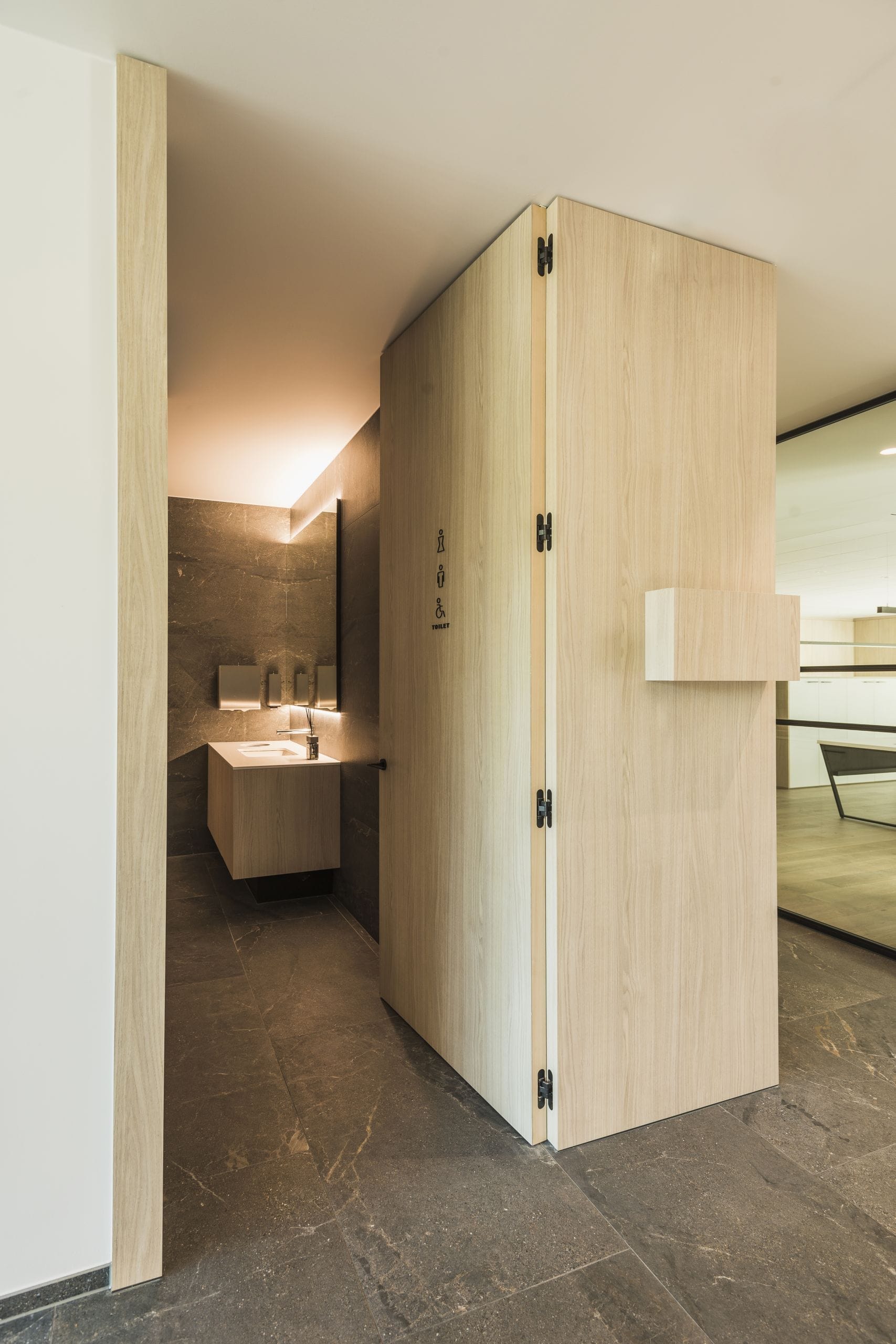
Choosing door hardware might seem straightforward, but it’s often where projects start to fall short. The wrong hinge can lead to misaligned doors, limited design options or hardware that simply doesn’t hold up over time.
This becomes a real issue in modern builds, where doors are larger, heavier and expected to contribute to the overall design. A standard solution won’t always cut it, especially when both performance and aesthetics matter.
That’s where understanding your options comes in. Comparing a pivot hinge and concealed hinges early in the process helps you avoid compromises, ensuring the door functions properly and fits seamlessly into the design from day one.
Pivot vs concealed hinges: how they work and what sets them apart
A pivot hinge supports a door from the top and bottom rather than the side. Instead of swinging from a frame-mounted hinge, the door rotates on a central or offset axis. This allows for larger, heavier doors and creates a smooth, controlled movement.
A pivot door hinge is typically installed into the floor and ceiling or head frame. Because the load is distributed vertically, it can handle significant weight without relying on side fixings.
Concealed hinges, on the other hand, are fully hidden within the door and frame. When the door is closed, the hardware is invisible. These hinges operate in a more traditional side-mounted way but are engineered to sit flush within joinery for a clean finish.
The key differences come down to:
- Load direction: vertical for pivot, lateral for concealed
- Visibility: exposed mechanism vs fully hidden
- Movement: rotational pivot vs standard swing
Design impact: statement feature vs seamless minimalism
A pivot hinge creates presence. It turns a door into a design feature, often used for oversized entry doors or as an architectural focal point. The offset pivot point allows for wider panels and a more dramatic opening motion, which suits contemporary homes and commercial spaces aiming for impact.
A pivot door hinge also changes how a space feels. The movement is smoother and more controlled, giving a premium, architectural finish that standard hinges can’t replicate.
Concealed hinges do the opposite. They remove visual distraction and support a minimalist look. With no visible hardware, the door blends into the wall or joinery, making them ideal for clean, uninterrupted lines.
If the goal is to highlight the door, a pivot system delivers. If the goal is to hide it, concealed hinges are the better fit.
Installation realities: what needs planning early
Hinge selection isn’t something to leave until the final stages. Planning early ensures the architectural hardware integrates properly with the door system and avoids costly adjustments on site. In Australia, these decisions also need to align with the National Construction Code, which sets minimum requirements for safety, performance and compliance in building design.
Pivot systems need:
- Structural support in the floor and ceiling
- Accurate load calculations
- Precise alignment during installation
Because the pivot hinge carries the full weight of the door, the surrounding structure must be prepared to handle it.
Concealed hinges require:
- High-precision joinery
- Exact door and frame tolerances
- Careful positioning to ensure smooth operation
While less structurally demanding, concealed hinges still rely on accuracy. Even minor misalignment can affect performance.
Planning early ensures the architectural hardware integrates properly with the door system and avoids costly adjustments on site.
Performance, durability and long-term value
Performance isn’t just about how a door opens on day one. It’s about how it holds up over years of use.
Pivot systems are built for strength. A quality pivot hinge can support large and heavy doors with ease, making it suitable for high-traffic areas and statement entry points. The vertical load distribution reduces stress on the frame, which can improve long-term durability.
Concealed hinges are designed for consistency and reliability. They handle standard door weights well and provide smooth operation when installed correctly. However, they generally have lower weight capacities compared to pivot systems.
From a cost perspective:
- Pivot systems often have higher upfront and installation costs
- Concealed options are typically more budget-friendly
Maintenance also differs:
- Pivot systems may require occasional adjustment or servicing
- Concealed hinges are low maintenance but can be harder to access if needed
Over time, the best value comes from choosing the right architectural hardware for the application rather than focusing only on upfront cost.
Best applications: where each hinge works best
Understanding the differences is one thing, but knowing where each hinge performs best makes the decision much clearer.
Pivot systems shine in modern builds
Pivot systems are ideal when scale and impact matter. They’re commonly used for:
- Oversized front doors
- Feature entrances in high-end residential builds
- Commercial spaces with frequent use
- Wide internal openings where standard hinges aren’t suitable
They allow architects and builders to work with larger formats while maintaining performance and control.
Where concealed hingesquietly do their best work
Concealed hinges are best suited for:
- Internal doors in residential settings
- Minimalist or flush wall designs
- Spaces where visual continuity is important
- Joinery-style door applications
They support a clean finish without competing with other design elements.
Matching hinge choice to design intent
The decision often comes down to intent:
- Choose pivot when the door is a feature
- Choose concealed when the door should blend in
Making this decision early keeps the project aligned from design through to installation.
How to choose without overcomplicating it
With so many factors to consider, breaking the decision down into a few key steps makes it far more manageable.
Start with size, weight and door function
Begin with the practical requirements:
- Door dimensions and material
- Expected usage
- Location within the build
In many projects, usability is just as important as performance. Australian Standard AS 1428.1 outlines requirements for accessibility, ensuring doors and hardware are easy to operate for a wide range of users.
Choose the visual outcome you want
Decide whether the door should stand out or disappear into the space. This will quickly guide your hardware selection.
Balance budget, installation and longevity
Consider the full picture:
- Hardware cost
- Installation requirements
- Long-term durability
A higher-quality architectural hardware solution may involve a larger upfront investment but deliver better performance over time.
The final swing: get the right hinge with Abesco
Choosing between a pivot hinge and concealed hinges isn’t about which is better. It’s about which is right for the space, and having the right team behind you ensures that decision translates seamlessly from design to installation.
At Abesco, we make selecting between pivot hinges and concealed hinges easy. Our team blends personalised service, premium partnerships and tailored design solutions. With over 35 years of experience, our family-run business combines award-winning expertise with a strong focus on customer experience and attention to detail.
Aside from architectural hardware, we offer bespoke indoor and outdoor shading solutions, supported by exclusive access to leading brands such as Luxaflex and Somfy. This makes us a trusted choice for high-quality, customised solutions that enhance functionality and intelligent design in Australian homes.
Explore our range of architectural hardware, including hinges, locks and latches, or get in touch to discuss your project with our team today. We’ll help you decide on the right solution with confidence.