
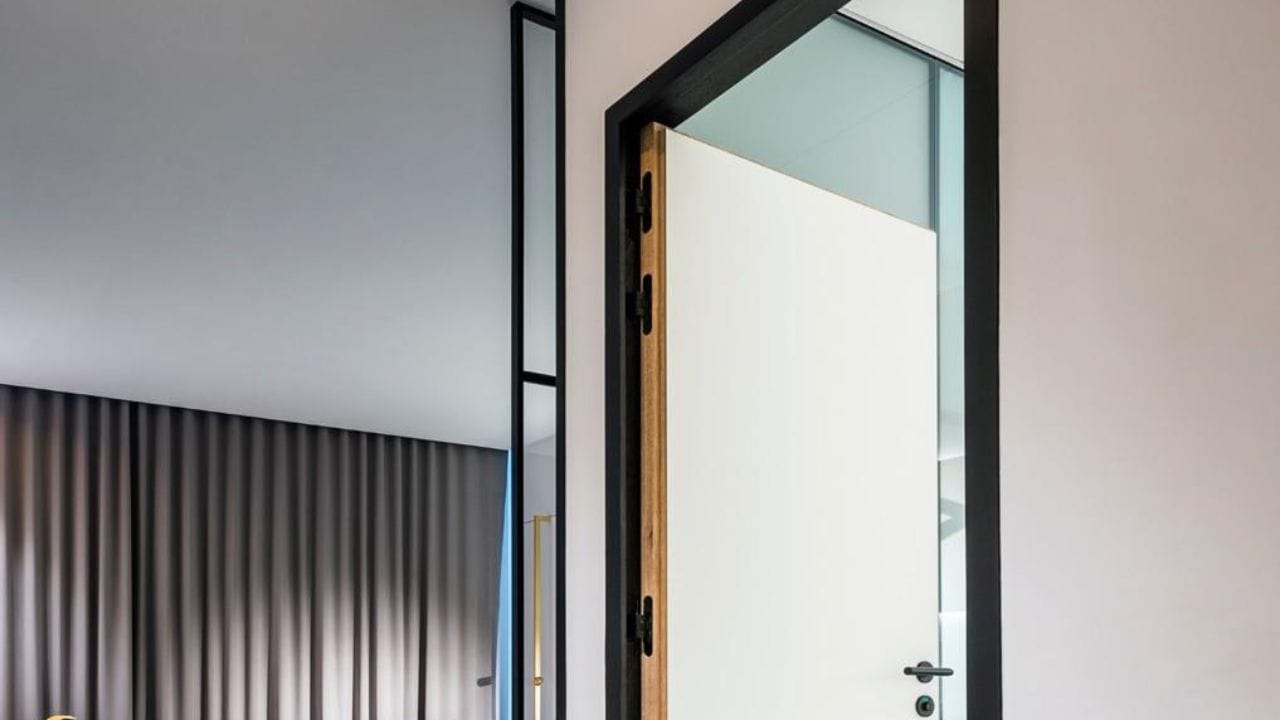
The shift towards sustainable architecture is transforming the way homes and commercial spaces are designed. Materials are chosen more thoughtfully, lighting is planned for efficiency and building systems are assessed for long-term performance. Yet some of the most meaningful gains come from the elements people rarely see. Hardware influences durability, airflow and daily energy use far more than most realise.
Pivot hinges are one of these quiet contributors. In the sections ahead, we discuss circular design and construction, explore how pivot hinges support eco-friendly design and explain why they are becoming a valuable tool for architects committed to greener, more energy-efficient homes.
How small details influence sustainable architecture
Sustainable architecture is often defined by insulation values, solar performance and responsible material sourcing, but the finer details play an equally important role in long-term efficiency. Every component affects how a building moves, functions and responds to daily use, and these interactions have a direct impact on energy performance and material longevity.
Pivot hinges are a strong example of how subtle mechanisms can influence the bigger picture. Their load-bearing design reduces stress on frames, maintains alignment and helps prevent premature wear. Fewer repairs translate to fewer replacements and significantly less waste across a building’s lifecycle.
By prioritising hardware that lasts, designers strengthen the durability and environmental performance of the entire structure. In this sense, sustainability lives in small, subtle engineering choices that support broader circular design principles.
Sustainability through circular design
Circular design encourages green buildings to be created, used and maintained in ways that minimise waste across their entire lifecycle. It shifts focus from disposable components to systems that remain functional through repair, adjustment and reuse. This approach is increasingly important in a sector that accounts for roughly half of the world’s material use, with only a small share currently coming from recycled sources.
Within circular design and construction, pivot hinges offer the durability and adaptability necessary to minimise long-term material consumption.
What makes pivot hinges naturally suitable for eco-friendly design
Pivot hinges complement eco-friendly design because their mechanics support clean detailing, efficient construction and material-conscious specification. Their installation method eliminates the need for heavy reinforcing, which reduces the overall material load of the door assembly and supports more efficient use of resources during the build.
Key qualities that make pivot hinges compatible with sustainable architecture include:
- A streamlined structural footprint that avoids bulky framing and reduces reliance on additional supporting materials
- Compatibility with sustainable door substrates, including recycled timber, low-VOC composite panels and responsibly sourced solid woods
- Support for flush, airtight door-to-wall integration, which improves thermal performance and reduces unintended air transfer
- Even load distribution into the floor, which protects surrounding materials and maintains stability as the building settles
By allowing doors to perform well with minimal material intervention, pivot hinges support efficient construction and clean architectural detailing that aligns with sustainable design values.
The long-term efficiency benefits of pivot systems
Sustainable architecture depends on components that perform reliably for several years. Pivot systems deliver long-term efficiency by reducing maintenance, protecting adjacent materials and supporting the thermal stability of energy-efficient homes.
Key performance benefits include:
- Durability that reduces replacement cycles — Engineered to carry significant weight, pivot hinges resist sagging and warping, which reduces the need for repairs and replacements across the building’s lifespan.
- Smooth operation that protects surrounding materials — With minimal friction, pivot systems prevent wear on door edges, frames and adjacent finishes, helping sustainable materials maintain their integrity over time.
- Performance suited to energy-efficient homes — Clean alignment and consistent movement help preserve tight seals, supporting stable indoor temperatures with less reliance on mechanical conditioning.
Design considerations when specifying pivot hinges for green building
In sustainable architecture, performance depends on more than choosing the right mechanism. How pivot hinges are specified, installed and paired with materials has a significant impact on long-term efficiency.
Thoughtful planning helps ensure the hinge supports both the architectural intent and the environmental goals of the project. Consider the following design aspects when designing your build:
Door scale, load and longevity
The hinge must match the door’s weight, dimensions and material composition. Heavy recycled timber or composite doors may require heavy-duty hinges to maintain stability over many years. Choosing the correct load rating minimises future resource use.
Movement, frequency and environmental conditions
High-traffic zones require hinges rated for repeated cycles. Environmental exposure also matters. Spaces with humidity or temperature swings benefit from corrosion-resistant finishes and moisture-tolerant components.
Installation accuracy for long-lasting performance
Even small installation errors can affect a door’s alignment and reduce its thermal efficiency. Positioning the pivot accurately in the floor and ceiling supports smooth movement and consistent seals. Working with installers who understand architectural hardware ensures the hinge contributes to broader sustainability goals.
Mistakes to avoid when using pivot hinges in sustainable projects
Even well-designed green buildings can lose efficiency when pivot hinges are specified or installed incorrectly. Common mistakes to avoid include:
- Choosing hinges with an incorrect load rating, which leads to premature wear and unnecessary replacements
- Pairing pivot systems with door materials that are not suited to long-term movement or environmental exposure
- Overlooking environmental conditions like humidity or temperature variation, which can affect performance over time
- Allowing installation inaccuracies that compromise airtightness and reduce thermal stability in energy-efficient homes
Avoiding these issues ensures pivot hinges support the broader sustainability goals of the project rather than working against them. Sustainable construction relies on precise specification and installation, which is why engaging specialists early in the design process helps ensure every detail aligns with the project’s environmental intent.
Build sustainably without compromising value or performance with A’besco Architectural Hardware
A’besco Architectural Hardware offers a curated range of solutions that align with responsible building practices. Our pivot hinges support larger doors with minimal framing, while our concealed hinges deliver clean, uninterrupted lines suited to energy-efficient interiors.
For doors that require smooth, reliable performance, our locks, latches and catches provide a refined and durable complement. If your project calls for seamless architectural integration, our invisible doors offer complete visual continuity without compromising structural integrity.
If you would like guidance on specifying hardware that supports sustainable architecture, our team is ready to collaborate with you. Explore the full range or speak with a specialist to refine the details that make your project perform beautifully for years to come.